

Secure Bicycle Storage Shed Guide: Protecting High-Value Bikes in 2026
Would you leave ten thousand dollars in cash in a thin plastic box on your driveway overnight? Probably not. Yet, many owners store their premium road bikes and high-torque e-bikes in a secure bicycle storage shed that isn't actually secure at all. You've invested significant time and money into your gear, and the constant worry about angle-grinder theft, salt-air rust, or e-bike battery safety is a burden you shouldn't have to carry.
Finding the right protection means looking beyond basic aesthetics to find a genuine engineered vault. In this guide, we'll show you how to evaluate high-security features that protect your investment from both professional criminals and extreme weather. We'll cover everything from fire-rated materials for safe charging to hurricane-rated structural integrity. You're about to discover how a professional-grade Japanese steel solution can provide a "set and forget" sanctuary for your bikes that lasts over 20 years. Whether you're fighting coastal humidity or urban theft trends, we'll help you secure your ride for the long haul.
Key Takeaways
- Learn why a standard garden shed is no longer sufficient for modern e-bikes and how a specialized secure bicycle storage shed serves as a high-tech vault for your investment.
- Compare the long-term maintenance of wood and resin against the rust-proof, fire-proof reliability of Japanese steel.
- Identify the best location and foundation types to maximize both the accessibility and the physical security of your outdoor storage hub.
- Discover how layered security and smart monitoring can protect your bikes from sophisticated theft attempts and environmental hazards.
- Explore how the YODOKO LMDS and ESF series provide 20 years of structural integrity with hurricane-rated engineering.
The New Standards for a Secure Bicycle Storage Shed in 2026
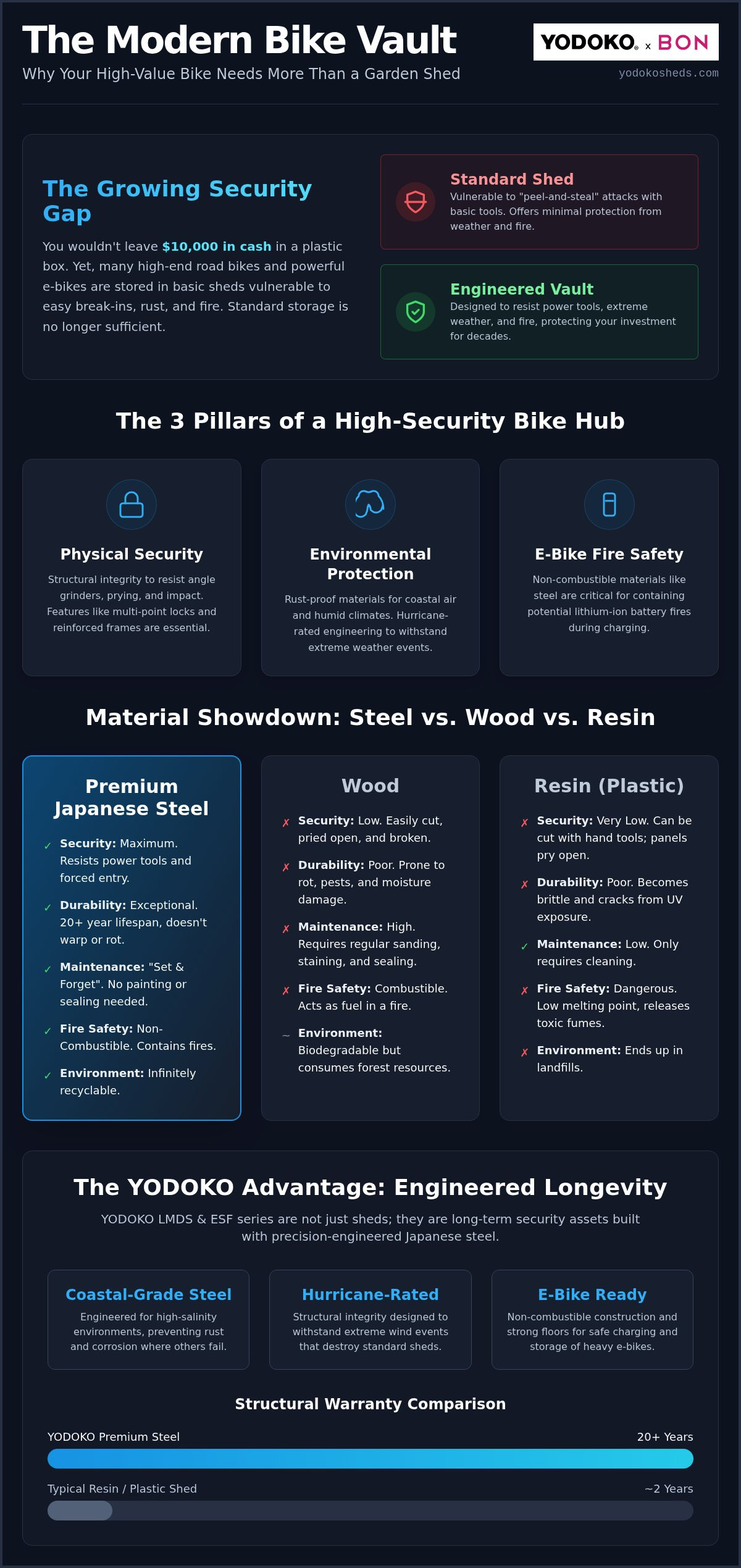
In 2026, the definition of a secure bicycle storage shed has moved far beyond a simple garden box. It's now a specialized vault. Standard sheds often fall victim to "peel-and-steal" attacks. This is where thieves use basic hand tools to pry open thin panels or flimsy doors. A true high-security solution rests on three pillars: physical security, environmental protection, and fire safety. These elements ensure your high-value road or e-bike stays exactly where you left it, regardless of the weather or local crime trends.
Structural integrity is the first line of defense. High-end storage must resist angle grinders and prying. If the walls are thin enough to dent with a fist, they won't stop a determined thief. You need a structure that functions as a cohesive unit, where every panel and joint contributes to the overall strength. This engineering approach transforms a simple storage space into a reliable security asset.
The Rise of E-Bike Storage Requirements
E-bikes have fundamentally changed what we need from outdoor storage. First, there's the weight. A typical e-bike can easily weigh 25kg or more. This requires a shed floor with superior structural integrity to prevent sagging or cracking over time. Second, lithium-ion batteries introduce a unique risk. Storing and charging these batteries requires fire-proof materials, like Japanese steel, to contain potential thermal events. Many owners now integrate internal charging stations, making power access and fire-rated walls non-negotiable features. While Bicycle lockers are common in public spaces, bringing that level of safety to your home is the new benchmark for 2026. It's about creating a dedicated charging hub that's as safe as it is convenient.
Security Ratings: What to Look For
Not all metal sheds are created equal. When evaluating a secure bicycle storage shed, start with the steel gauge. Thin, flimsy metal is easily cut with manual shears or even heavy-duty tin snips. You need heavy-duty materials that resist power tools and physical impact. Look for reinforced door frames that prevent prying and tamper-proof hinge designs that can't be unscrewed from the outside. A multi-point locking system is also essential. Unlike a single padlock that creates a clear point of failure, multi-point systems secure the door at the top, bottom, and middle. This creates a uniform seal that's nearly impossible to breach without heavy machinery. This level of engineering ensures your gear remains protected for the next 20 years.
Comparing Materials: Steel vs. Wood vs. Resin
Choosing a secure bicycle storage shed requires a hard look at the materials. Wood and resin are common, but they often fail when tested by time or thieves. Wood absorbs moisture, leading to rot and structural weakness within a few years. Resin sheds, while lightweight, often degrade under intense UV exposure, becoming brittle and prone to cracking. These weaknesses aren't just maintenance headaches; they're security vulnerabilities.
Maintenance is another differentiator. Wood requires regular sanding and painting to stave off decay. Resin is low maintenance but lacks structural longevity. High-grade steel offers a "set and forget" experience. It doesn't warp, rot, or attract pests, making it the most sustainable choice for a long-term investment. Recyclability is also a factor. While resin eventually ends up in a landfill, steel is infinitely recyclable. This makes it the responsible choice for the environmentally conscious cyclist.
Why Premium Japanese Steel Wins
Standard metal sheds often use thin tin that rusts quickly. Premium Japanese steel, featured in the LMDS and ESF lines, is engineered specifically for high-salinity coastal environments. This material doesn't just resist rust; it's hurricane-rated to withstand extreme wind events that would flatten a standard garden shed. When you compare a typical 2-year resin warranty to a 20-year structural warranty, the value of precision engineering becomes clear. According to the DDOT Bike Parking Guide, selecting durable materials is critical for long-term security and asset protection in any urban or coastal setting.
Fire Resistance and Asset Protection
If you own an e-bike, fire safety is a primary concern. Wood is essentially fuel. If a lithium-ion battery experiences a thermal event, a wooden shed will accelerate the blaze. Resin isn't much better. It has a low melting point and releases toxic fumes when heated. Non-combustible steel is the gold standard. It contains heat and prevents fire spread, acting as a true vault for your assets. You can explore fire-rated steel options to ensure your charging station remains a safe environment for your home and family.
Theft resistance is where the material gap becomes a chasm. A thief with a manual saw can cut through resin or wood in minutes. Pry bars easily splinter wooden frames. A secure bicycle storage shed built from reinforced steel resists these common attack methods, forcing criminals to look for easier targets elsewhere. It's the difference between a temporary box and a permanent security solution.
Strategic Planning for Your High-Security Bike Hub
Setting up a secure bicycle storage shed involves more than just picking a spot in the backyard. You need a strategic approach to ensure your investment remains both protected and functional. Start by considering visibility. While you want your bikes accessible, placing the shed in a high-visibility area can deter thieves who don't want to be seen working on a lock. However, total concealment in a dark corner can backfire by providing cover for a criminal. The goal is a balance: easy for you to reach, but difficult for a stranger to access unnoticed.
Ventilation is another critical planning factor. Without proper airflow, temperature fluctuations cause condensation to build up on metal components. This leads to drivetrain rust and electronic failures in e-bikes. Professional-grade steel sheds often feature built-in vents to maintain a stable internal environment, protecting your high-value gear from the inside out. This planning stage is where you transform a simple purchase into a long-term security asset.
Foundation and Anchoring Best Practices
Concrete slabs are the gold standard for foundation work. A solid base provides the necessary weight and surface area for heavy-duty anchoring kits. These kits are vital to prevent the "lift-and-shift" method, where thieves attempt to tilt or move the entire structure to access the contents. A level surface also ensures that precision-engineered doors, like those on the LMDS and ESF models, operate smoothly for decades. For more tips on secure placement, the Boston.gov bike parking guide offers excellent insights into how urban environments influence storage choices. Don't settle for gravel or dirt; a firm foundation is the bedrock of your security strategy.
Maximizing Interior Space and Organization
Inside the shed, organization is about more than just neatness; it's about accessibility. Utilizing vertical shelving allows you to store helmets, pumps, and tools without cluttering the floor. If you're managing a family collection, high-density rack configurations can maximize every square inch of the interior. Natural lighting, often achieved through small windows or translucent roof panels, improves visibility during early morning or late evening rides. This makes your secure bicycle storage shed a functional workspace rather than just a storage box. When every tool has a place and every bike is easy to reach, you're more likely to enjoy your ride and less likely to damage your equipment during retrieval.
Advanced Security Features for 2026
Thieves in 2026 have become more sophisticated, often using battery-powered grinders and high-leverage prying tools. To counter these threats, a secure bicycle storage shed must move beyond a simple lock and key. We recommend a "box within a box" philosophy. This layered security approach starts with a high-strength steel exterior but doesn't end there. By installing internal ground anchors directly into your concrete foundation, you create a secondary defense line. Even if a professional criminal manages to breach the outer door, your bikes remain physically tethered to the structure. This redundancy is what separates a basic shed from a high-security vault.
Hardware design is equally important. Many standard sheds have exposed screw heads or hinges that can be removed with a simple screwdriver. Professional-grade units like the LMDS and ESF series utilize tamper-proof hardware. These designs eliminate external fasteners, ensuring there's no easy way to deconstruct the shed from the outside. When every joint is reinforced and every fastener is internal, the structure becomes a single, impenetrable unit.
The Engineering of Tamper-Proof Doors
The door is the most common point of attack. A secure bicycle storage shed requires precision-fit doors that leave no gaps for crowbars or jemmy bars. High-quality Japanese engineering ensures that the clearance between the door and the frame is minimal, preventing thieves from gaining the leverage needed to pry the panels apart. Recessed locking mechanisms further enhance this protection by shielding the lock cylinder from bolt cutters and hammers. Additionally, reinforced thresholds prevent criminals from prying at the base of the door, a common tactic used to bypass traditional locking systems.
Monitoring and Alarm Integration
Smart technology has transformed outdoor security. You can now integrate battery-powered motion sensors and wireless cameras that provide 24/7 monitoring even in remote areas of your property. These systems connect to your smartphone, providing instant alerts the moment someone approaches the shed. This integration plays a vital role in secure outdoor storage for valuables, allowing you to react before a theft attempt even begins. In 2026, an active deterrent is defined as a system that uses real-time data and sensors to identify a threat before the physical breach occurs. By combining physical steel barriers with digital monitoring, you create a comprehensive security hub for your cycling collection.
If you're ready to upgrade your bike security to an engineered steel vault, view the full range of Yodoko LMDS and ESF sheds today.
The Yodoko Advantage: LMDS and ESF Series
Not all metal sheds are created equal. While many products on the market use thin, generic tin panels, Yodoko products rely on precision Japanese engineering. This expertise results in a secure bicycle storage shed that functions more like an engineered vault than a backyard box. Every panel, joint, and track is designed to fit with a level of accuracy that prevents the gaps thieves often exploit. This precision isn't just for security; it ensures that your shed remains easy to operate for decades, even in harsh conditions.
Longevity is a core part of the brand's promise. A 20-year structural warranty backs every unit, providing a level of confidence that resin or wooden alternatives simply can't match. To ensure this structural integrity is realized from day one, we offer a professional assembly service. Having experts handle the setup ensures that every bolt is tightened to spec and every door is perfectly aligned. This professional touch is what makes the "set and forget" security solution possible for high-value bike owners.
LMDS Series: The Walk-In Bike Vault
The LMDS series is designed for enthusiasts who need a spacious, walk-in solution. These units offer massive internal volume, making them ideal for high-density collections of road bikes, mountain bikes, and e-bikes. The heavy-duty steel paneling and reinforced roofing provide a formidable barrier against both physical attacks and extreme weather events. Because of its scale and strength, the LMDS is also frequently used for motorcycle storage shed steel needs, highlighting its versatility. You can customize the interior with shelving options to keep your tools, spare parts, and helmets organized in a dedicated professional workspace.
ESF Series: Compact High-Security Storage
For those with limited outdoor space or smaller bike fleets, the ESF series offers a compact yet uncompromising alternative. It's the perfect secure bicycle storage shed for urban environments where every square inch matters. Despite its smaller footprint, the ESF line features the same fire-proof and rust-proof qualities found in our larger models. You don't have to sacrifice security for size. The precision-engineered sliding or swing doors provide smooth, reliable access even after years of exposure to rain and UV rays. It's a premium, durable solution that fits perfectly into side passages or smaller courtyards without becoming an eyesore.
Investing in Your Cycling Future
Securing high-value bicycles in 2026 requires a shift in mindset. You're no longer just looking for a place to hide your gear; you're investing in a sophisticated security hub. By prioritizing fire-proof materials and hurricane-rated structural integrity, you ensure that your road bikes and e-bikes remain protected from both opportunistic thieves and the elements. Choosing a secure bicycle storage shed engineered from Japanese steel eliminates the maintenance burdens of wood and the fragility of resin.
The LMDS and ESF series provide the ultimate "set and forget" solution. With a 20-year structural warranty, these sheds are built to outlast your current fleet and the ones that follow. You've done the research and you understand the importance of precision engineering. Now it's time to take the final step toward complete peace of mind for your outdoor storage needs.
Don't leave your investment to chance. Explore the Yodoko High-Security Shed Collection and discover why precision engineering is the gold standard for modern bike protection. Your next ride starts with the confidence that your gear is safe, dry, and ready to go.
Frequently Asked Questions
How do I make a metal bike shed more secure against angle grinders?
You can enhance a metal shed's resistance by using a "box within a box" strategy. This involves bolting heavy-duty internal ground anchors directly into a concrete foundation. While no material is completely immune to power tools, high-gauge Japanese steel significantly slows down a thief; it makes the attempt loud and time-consuming. Combining this physical barrier with motion-activated alarms and smart cameras creates a formidable deterrent that forces criminals to seek easier targets elsewhere.
Are steel sheds fire-proof enough for e-bike battery charging?
Non-combustible steel is the gold standard for e-bike safety because it doesn't fuel a fire. If a lithium-ion battery suffers a thermal event while charging, a wooden or resin shed would quickly ignite and spread the blaze. Japanese-engineered steel helps contain the heat and prevents the fire from reaching nearby structures. This fire-proof quality makes a secure bicycle storage shed the safest environment for high-voltage battery maintenance and long-term storage.
What is the best foundation for a high-security bicycle shed?
A reinforced concrete slab is the best foundation for maximizing structural security. It provides a level surface that ensures precision-engineered doors operate smoothly without jamming. More importantly, concrete allows you to use heavy-duty expansion bolts to anchor the shed's frame and internal bike racks. This prevents thieves from using the "lift-and-shift" method to access your gear. Avoid using gravel or dirt foundations; they lack the necessary weight and stability for high-security applications.
Do I need a permit for a walk-in bike storage shed?
Permit requirements vary significantly based on your local building codes and the size of the structure. Most small to medium-sized storage units don't require a permit, but larger walk-in models like the LMDS series might. Factors such as height, total square footage, and proximity to property lines often trigger the need for official approval. It's always best to contact your local planning department before installation to ensure your new storage hub complies with all regional regulations.
How can I prevent condensation and rust inside my bike shed?
Proper ventilation is the most effective way to prevent condensation from forming on your bike's metal components. Look for sheds with built-in air vents that encourage constant airflow; this helps regulate internal temperatures. Choosing a shed made from rust-proof Japanese steel also provides a critical advantage, especially in coastal areas. These materials don't degrade in high humidity, ensuring your drivetrain and frame remain dry and free from corrosive damage for over 20 years.
Can I store my e-bike in a steel shed during extreme winter or summer?
You can store an e-bike in a steel shed year-round, but you must manage the battery carefully. Extreme temperatures can degrade lithium-ion cells over time. During peak summer or freezing winter, we recommend removing the battery and storing it indoors in a climate-controlled environment. The steel structure itself provides excellent protection against rain, snow, and UV rays, but the sensitive electronics in your bike's motor and battery require extra attention during seasonal peaks.
What is the difference between the YODOKO LMDS and ESF models for bikes?
The primary difference lies in the size and intended use of the units. The LMDS series is a spacious walk-in vault designed for large collections or multi-use storage. It offers massive internal volume and customizable shelving. In contrast, the ESF series is a compact, high-security solution perfect for urban spaces and smaller fleets. Both lines feature the same fire-proof Japanese steel and hurricane-rated engineering, ensuring your secure bicycle storage shed provides premium protection regardless of its footprint.
How many bikes can fit in a standard 6x8 steel shed?
A standard 6x8 steel shed can typically accommodate between four and six adult bicycles, depending on your internal rack configuration. Using vertical wall mounts or staggered floor racks allows you to maximize the floor space while keeping each bike accessible. If you're storing wide-handlebar mountain bikes or heavy e-bikes, you might find that four bikes fit more comfortably with room for tools. Effective organization is the key to turning a medium-sized shed into a high-density storage hub.