
What Is a Japanese Steel Shed? And why made in Japan
Not all sheds are created equally, and if you've ever watched a cheap steel shed rust, warp, or buckle after a single harsh season, you already know that the material and engineering behind your storage solution matters far more than the price tag. A Japanese steel shed takes a fundamentally different approach, combining decades of precision manufacturing with materials engineered to outlast the elements.
You're right to want more from outdoor storage. Whether you're dealing with coastal humidity, intense heat, or storm-prone conditions, the frustration of a shed that fails too soon is real and costly. That concern deserves a proper answer, not a generic one.
This article covers everything you need to know about Japanese steel sheds: what makes them genuinely different from standard options, why the engineering behind them matters, and how to choose and maintain the right shed for your specific conditions. From rust-proof and fire-proof construction to installation considerations, you'll walk away with a clear picture of what to look for and why it's worth getting right the first time.
Key Takeaways
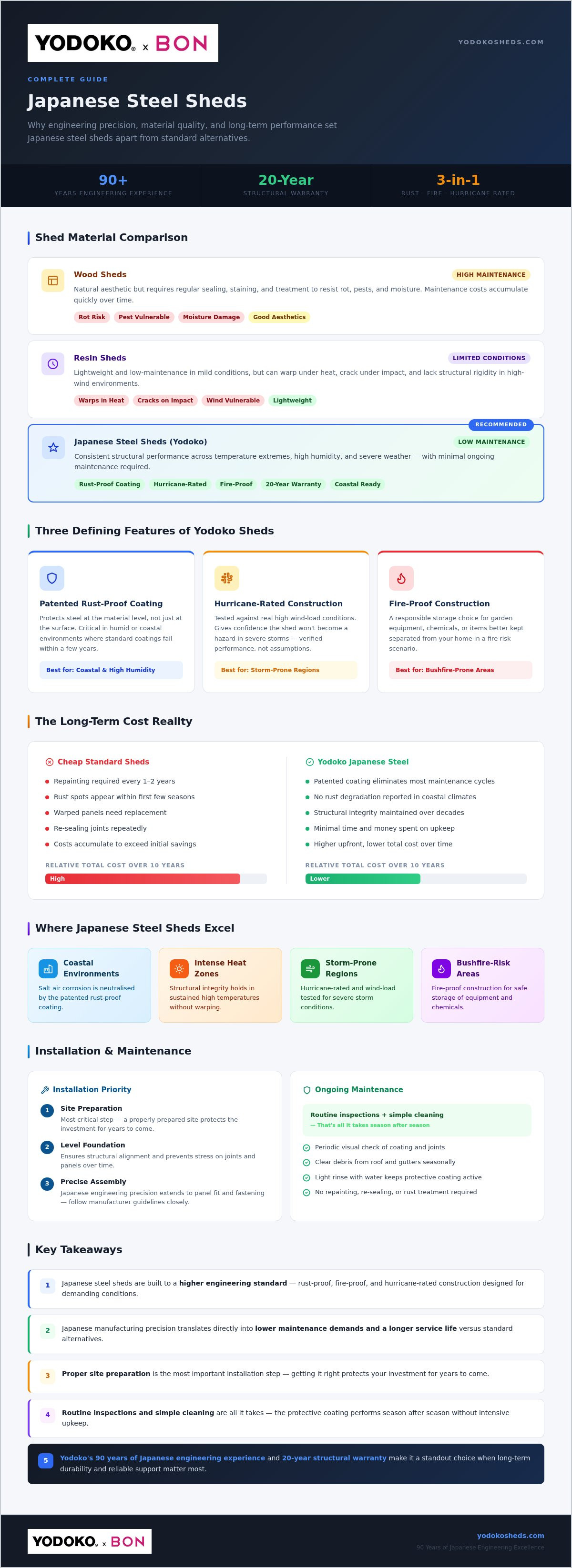
- A Japanese steel shed is built to a higher engineering standard than typical storage options, with rust-proof, fire-proof, and hurricane-rated construction designed to handle demanding conditions.
- The materials and manufacturing precision behind Japanese-engineered sheds translate directly into lower maintenance demands and a longer service life compared to standard alternatives.
- Proper site preparation is one of the most important steps in the installation process — getting it right from the start protects your investment for years to come.
- Routine inspections and simple cleaning practices are all it takes to keep your shed's protective coating performing as intended season after season.
- Yodoko's 90 years of Japanese engineering experience and 20-year structural warranty make it a standout choice when long-term durability and reliable support matter most.
What is a Japanese Steel Shed?
A Japanese steel shed is a purpose-engineered outdoor storage structure built to standards that most Western-manufactured alternatives simply don't match. The distinction isn't just about where it's made; it's about the engineering philosophy behind it. Japanese manufacturing culture places exceptional emphasis on precision, material quality, and long-term performance, and those values show up directly in how these sheds are designed, coated, and tested before they ever reach a customer.
Yodoko brings over 90 years of Japanese engineering experience to its steel sheds, producing structures that are rust-proof, fire-proof, and hurricane-rated. That combination isn't marketing language. It reflects a genuine commitment to building something that holds up in real conditions, whether that's coastal salt air, bushfire-prone regions, or storm-heavy climates.
The 20-year structural warranty that backs Yodoko sheds is a direct expression of that confidence. A warranty of this length covers the integrity of the structure itself, giving you a meaningful assurance that the shed is built to last, not just built to sell. It's the kind of commitment that separates a considered engineering product from a commodity item.
Comparing Japanese Steel Sheds to Other Shed Types
Steel, wood, and resin each take a different approach to outdoor storage, and the trade-offs are significant. Here's how they compare honestly:
- Wood sheds offer a natural aesthetic but require regular sealing, staining, and treatment to resist rot, pests, and moisture. Maintenance costs accumulate quickly over time.
- Resin sheds are lightweight and low-maintenance in mild conditions, but they can warp under heat, crack under impact, and lack the structural rigidity needed in high-wind environments.
- Japanese steel sheds deliver consistent structural performance across temperature extremes, high humidity, and severe weather, with minimal ongoing maintenance required.
Over a decade or more, the lower maintenance demands of a well-engineered steel shed often make it the more cost-effective choice, even if the initial investment is higher than a basic resin or timber option.
Key Features of Yodoko Sheds
Three features define the Yodoko difference in practical terms. First, the patented rust-proof coating protects the steel at a material level, not just at the surface, which matters enormously in humid or coastal environments where standard coatings fail within a few years. Second, the hurricane rating means the structure has been tested against high wind-load conditions, giving you confidence that the shed won't become a hazard in a severe storm. Third, fire-proof construction makes Yodoko sheds a responsible storage choice for garden equipment, chemicals, or anything you'd rather keep separated from your home in a fire risk scenario.
Together, these features reflect an engineering standard that the Yodoko LMDS and ESF steel sheds are built around from the ground up.
Benefits of Choosing a Japanese Steel Shed
The case for a Japanese steel shed goes well beyond rust resistance and a solid warranty. It's about what you get back over time: fewer repairs, less worry, and a structure that keeps doing its job without demanding constant attention. These benefits compound across years of use, and they're worth understanding in detail before you make a decision.
Durability and Longevity
Yodoko sheds are engineered to perform in conditions that expose weaknesses fast. Coastal salt air, cyclonic wind loads, sustained heat, and fire-prone environments each place different stresses on a structure. The hurricane-rated design means the shed has been tested against real wind-load scenarios, not just assumed to handle them. That kind of verified performance matters when severe weather isn't a hypothetical.
The long-term cost picture is equally compelling. Maintenance expenses on cheaper alternatives add up quickly: repainting, treating rust spots, replacing warped panels, re-sealing joints. A Yodoko shed's patented coating is designed to eliminate most of that cycle entirely. Owners in humid and coastal climates consistently report that the shed looks and performs as expected years after installation, without the surface degradation that typically shows up on standard steel alternatives within the first few seasons.
Versatility and Customization
One of the quieter strengths of a well-engineered steel shed is how adaptable it is. The Yodoko LMDS and ESF steel sheds are available in different sizes and configurations, which means you're not forced to compromise between what you need and what's available. Whether the space is earmarked for garden equipment, a workshop setup, or general outdoor storage, the structure handles the application without modification.
Shed accessories expand the functionality further, letting you configure the interior for specific storage needs rather than working around a generic layout. That kind of flexibility also plays well with landscaping and outdoor design. A clean, modern steel shed sits naturally alongside contemporary architecture or a well-kept garden, and it doesn't require the cosmetic upkeep that timber structures demand to stay looking presentable.
The aesthetic is understated but deliberate. Japanese design sensibility favors clean lines and functional form, and that comes through in how Yodoko sheds sit within an outdoor space. They don't dominate the yard; they complement it.
If you're weighing your options and want to see which configuration suits your space, explore Yodoko's shed range to find the right fit for your property and climate.
Installation Process: How to Set Up Your Japanese Steel Shed
Getting your shed installed correctly from the start is what separates a structure that performs for decades from one that causes problems within the first few years. The good news is that a Japanese steel shed from Yodoko is engineered with the installation process in mind, and with the right preparation, the assembly is straightforward for most homeowners.
Preparing the Installation Site
Site selection is the single most consequential decision you'll make before assembly begins. A few key factors to evaluate:
- Drainage: Avoid low-lying areas where water pools after rain. Even with a rust-proof coating, standing water around the base accelerates wear on any structure over time.
- Access and clearance: Leave enough room around the shed for door swing, ventilation, and future maintenance access. A minimum of 500mm clearance on each side is a practical starting point.
- Sun and wind exposure: Consider how prevailing winds and direct sun hit the site. In storm-prone regions, positioning the shed so the narrowest face meets the prevailing wind reduces load pressure on the structure.
- Ground surface: A concrete slab is the most stable foundation option and the one most commonly recommended for steel sheds. Compacted gravel with a moisture barrier is a viable alternative for smaller installations, but a concrete base offers the best long-term results.
Before breaking ground, check your local council requirements. Many Australian councils require a building permit for sheds over a certain floor area or height, and setback distances from property boundaries are commonly regulated. Checking these requirements early avoids costly repositioning later.
Assembly Instructions
Yodoko sheds are packaged with components organized for logical assembly, which makes the unboxing process easier than it sounds. Start by laying out all panels, fasteners, and hardware before you begin, and cross-reference each component against the included parts list. Missing a small piece mid-assembly is far more frustrating than catching it upfront.
Tools you'll typically need: a rubber mallet, a power drill with appropriate bits, a spirit level, a tape measure, and a ladder for roof panel installation. No specialized equipment is required.
A few practical tips that make a real difference:
- Don't fully tighten fasteners until the entire frame is square and plumb. Locking panels in early makes alignment corrections difficult.
- Work with a second person for roof panel installation. The panels are manageable, but having someone to hold them steady prevents misalignment and reduces the risk of damage.
- Use the spirit level frequently, not just at the foundation stage. Checking plumb at each wall section catches drift before it compounds.
Once the structure is assembled, anchoring is non-negotiable, particularly in high-wind areas. The shed should be secured to the foundation using the anchor points built into the base frame. If you'd prefer to leave the assembly to someone else, Yodoko's professional assembly service is available to handle the full installation process correctly the first time.
Maintenance Tips for Your Japanese Steel Shed
One of the genuine advantages of a Japanese steel shed is how little it asks of you once it's installed. The patented rust-proof coating and precision engineering do the heavy lifting, but a small amount of routine attention keeps everything performing exactly as intended for the long term. Think of it less as maintenance and more as a quick check-in a few times a year.
Routine Maintenance Tasks
A twice-yearly inspection covers most of what you need. Schedule one check in autumn before wet or cold weather sets in, and another in spring after the harshest conditions have passed. During each inspection, run through the following:
- Fasteners and anchor points: Check that all bolts and screws are tight. Vibration from wind and temperature cycling can gradually loosen connections over time.
- Seals and joints: Look along panel joins and around the door frame for any gaps that could allow water ingress.
- Roof panels: Clear any leaf litter, debris, or organic buildup. Accumulated debris retains moisture and can compromise surface coatings if left in contact for extended periods.
- Door alignment: Test that doors open and close smoothly. Misalignment can indicate a shift in the base or frame that's worth addressing early.
- Drainage around the base: Confirm that water is still flowing away from the shed perimeter, not pooling against the base frame.
For tools and supplies, you don't need much: a soft-bristle brush, a bucket of mild soapy water, a garden hose, and a torque screwdriver or wrench for fastener checks. Avoid abrasive pads or harsh chemical cleaners, which can degrade the protective coating rather than preserve it.
If you notice structural concerns beyond surface-level issues, such as panel deformation or base frame movement, contact Yodoko's support team rather than attempting structural repairs independently.
Common Issues and Solutions
Rust spots are rare on a well-coated Japanese steel shed, but if a surface scratch exposes bare metal, address it quickly. Clean the area with a damp cloth, allow it to dry fully, and apply a touch-up coating matched to the shed's finish. Catching this early prevents the kind of creeping corrosion that turns a minor scratch into a larger problem.
Dents from impact are mostly cosmetic on a structurally sound shed, but if a panel is significantly deformed or a join has separated, it's worth assessing whether the structural integrity has been affected. In high-wind regions, check anchor points and base fixings after any severe storm event, even if the shed looks undamaged from the outside.
Seasonal preparation is straightforward. Before winter or storm season, clear the roof, tighten all fasteners, and confirm that drainage around the base is unobstructed. That's genuinely all most owners need to do.
If you'd like guidance on keeping your shed in peak condition or want to explore accessories that improve internal organisation, visit Yodoko's website for support and product information.
Why Choose Yodoko for Your Steel Shed Needs?
Ninety years of Japanese engineering experience isn't a marketing footnote. It's the foundation that every Yodoko shed is built on. That depth of manufacturing knowledge shows up in ways that matter: the precision of panel tolerances, the integrity of protective coatings, and the structural confidence that comes with a 20-year warranty. When you're choosing a Japanese steel shed, you're choosing a product category where Yodoko has spent decades refining what "built to last" actually means in practice.
What separates Yodoko from other steel shed suppliers isn't just the product itself. It's the combination of a proven product line, meaningful warranty coverage, and genuine customer support that stays accessible after the purchase. That last point matters more than it might seem. A warranty is only as useful as the team standing behind it.
The product range reflects deliberate versatility. The YODOKO LMDS and ESF steel sheds cover different size and configuration needs, and shed accessories let you adapt the interior to your specific storage requirements. Whether you need a compact solution for a suburban garden or a larger structure for a workshop setup, there's a configuration that fits without compromise.
Customer Testimonials and Success Stories
Owners in coastal and storm-prone regions consistently highlight the same things: the shed holds up without the surface degradation they experienced with previous structures, and when questions arise, Yodoko's support team responds with clear, practical guidance rather than deflection. That kind of after-sales experience builds the brand loyalty that keeps customers coming back when they need a second shed or want to add accessories to an existing one. It's also what drives word-of-mouth recommendations in communities where outdoor storage is a genuine practical need, not an afterthought.
Contact Us for More Information
If you're ready to move forward or still working through which configuration suits your property, Yodoko makes it easy to get the right information without pressure. You can reach out through the website to ask questions, request a quote, or discuss which shed model fits your climate and available space. For those who prefer to see the product in person before committing, visiting the showroom gives you a direct sense of the build quality that's difficult to fully appreciate from photos alone.
Getting it right from the start is worth the conversation. Visit Yodoko's website to explore the full range, request a consultation, or find the support you need to make a confident, informed decision.
Make the Right Storage Decision Once
A Japanese steel shed isn't just a purchase; it's a long-term decision about what you want protecting your equipment, tools, and valuables for the next two decades and beyond. The engineering behind Yodoko sheds, built on 90 years of Japanese manufacturing expertise, delivers rust-proof and fire-proof performance that standard alternatives simply can't match. And a 20-year structural warranty means that confidence is backed in writing.
Getting the right shed matters. The wrong choice costs you time, money, and the frustration of replacing something that should have lasted. Yodoko is built around the opposite outcome: a structure that performs quietly and reliably, season after season, without demanding your constant attention.
You've got everything you need to make a confident decision. Now it's just about taking the next step.
Shop Now for Premium Japanese Steel Sheds and find the configuration that fits your property, your climate, and your storage needs. The right shed is out there, and it's built to last.
Frequently Asked Questions
What materials are used in Japanese steel sheds?
Japanese steel sheds are built from high-grade steel treated with a patented rust-proof coating that protects the material at a structural level, not just at the surface. Yodoko sheds combine this with fire-proof construction, meaning the core materials and finishes are selected specifically for performance in demanding conditions like coastal environments, high-humidity climates, and bushfire-prone regions.
The precision of Japanese manufacturing means component tolerances are tighter than what you'll typically find in mass-produced alternatives, which directly affects how well panels seal, how consistently the structure holds its shape, and how long the protective coating performs before showing any degradation.
How do I determine the right size shed for my needs?
Start by listing everything you plan to store, then add roughly 20 to 30 percent more floor area than you think you need. Storage needs almost always grow over time, and a shed that fits your current inventory exactly tends to feel cramped within a few seasons. Factor in whether you need room to move around equipment, work inside the shed, or store larger items like ride-on mowers or bicycles upright.
Yodoko offers the LMDS and ESF steel shed models in different configurations, so there's a practical starting point for both compact suburban blocks and larger properties. If you're unsure which suits your space, reaching out to Yodoko directly with your dimensions and intended use is the most reliable way to get a confident recommendation.
What is the warranty on Yodoko steel sheds?
Yodoko backs its steel sheds with a 20-year structural warranty, which covers the integrity of the structure itself. That's a meaningful commitment, not a standard short-term guarantee, and it reflects the confidence that comes from 90 years of Japanese engineering experience behind the product. A warranty of this length tells you something real about how the shed is expected to perform over time.
If structural concerns arise during the warranty period, contacting Yodoko's support team directly is the right first step. The warranty is only as useful as the team standing behind it, and Yodoko's customer support is built to provide practical guidance rather than deflection.
Are Yodoko sheds customizable with accessories?
Yes. Yodoko offers shed accessories that let you configure the interior to suit your specific storage requirements rather than working around a generic layout. Whether you need shelving for garden supplies, hooks for tools, or organisational solutions for a workshop setup, accessories extend the functionality of the shed well beyond basic storage.
This flexibility means the shed adapts to how you actually use it, which is a practical advantage over fixed-layout alternatives. You can explore the available accessories through Yodoko's website to see what works with the LMDS and ESF shed models.
How can I prepare my yard for shed installation?
Choose a site with good natural drainage so water doesn't pool around the base after rain. A concrete slab is the most stable foundation and the option most commonly recommended for steel sheds; compacted gravel with a moisture barrier works for smaller installations but doesn't offer the same long-term stability. Leave at least 500mm of clearance on each side for ventilation, door swing, and future maintenance access.
Before any groundwork begins, check your local council's requirements. Many Australian councils regulate shed installations based on floor area, height, and setback distances from property boundaries. Confirming these requirements early avoids the cost and frustration of repositioning a structure after the fact.
What maintenance is required for steel sheds over time?
A Japanese steel shed from Yodoko is genuinely low-maintenance, but a twice-yearly inspection keeps everything performing as intended. Each check should cover fastener tightness, door alignment, roof debris clearance, panel joins, and drainage around the base. A soft-bristle brush, mild soapy water, and a garden hose are all you need for cleaning. Avoid abrasive pads or harsh chemical cleaners, which can degrade the protective coating.
If a surface scratch exposes bare metal, address it promptly with a matched touch-up coating before moisture gets a foothold. Beyond that, the main seasonal task is clearing the roof and tightening fasteners before storm or wet weather season arrives. That's the full maintenance picture for most owners.
How do Japanese steel sheds compare to wooden sheds?
Wooden sheds require ongoing sealing, staining, and pest treatment to stay structurally sound, and those costs accumulate steadily over years of ownership. A Japanese steel shed eliminates most of that maintenance cycle. The patented coating handles what regular timber treatments can't, and steel doesn't rot, warp from moisture, or become a target for termites.
The trade-off is aesthetic preference. Timber has a natural look that some owners prefer, but it comes with a maintenance obligation that steel doesn't. Over a decade of ownership, the lower upkeep demands of a well-engineered steel shed typically make it the more cost-effective choice, even when the initial price point is higher than a basic timber option.