

Shed Roof Design for Snow & Rain: 2026 Engineering Guide
Most outdoor storage fails not because the weather is too harsh, but because the engineering is too weak. Selecting a high-performance shed roof design for snow and rain is no longer just about curb appeal; it's a structural requirement to prevent catastrophic collapse in an era of unpredictable storms. You've likely spent winter nights worrying if your roof will hold under a heavy pack, or felt the frustration of finding leaks that lead to rust and rot. It's a common fear, but your valuable equipment deserves better than a structure that leaves you guessing.
This guide will help you master the engineering principles required to ensure your storage survives heavy snow loads and torrential rain without structural failure. We'll break down the 2026 standards, including the latest ASCE 7-22 reliability-targeted ground snow loads and the critical 62 PSF rating that defines a truly durable roof. By the end, you'll understand how Japanese steel engineering provides a maintenance-free solution that protects your assets for decades, giving you total confidence regardless of what falls from the sky.
Key Takeaways
- Learn how to calculate the optimal roof pitch to ensure heavy snow slides off naturally before it compromises structural integrity.
- Discover why Japanese-engineered galvanized steel offers a superior strength-to-weight ratio that outperforms traditional wood or resin materials.
- Master the essential elements of shed roof design for snow and rain to effectively prevent ice damming and interior water damage.
- Identify the site preparation and anchoring techniques necessary to protect your storage from wind-driven rain and foundation erosion.
- Understand how the precision rail and gutter systems in the LMDS and ESF models provide a maintenance-free solution for harsh environments.
The Physics of Structural Failure: How Snow and Rain Compromise Sheds
Every shed roof faces a silent battle against gravity and fluid dynamics. While a light dusting of snow looks harmless, the physics of accumulation can quickly turn a backyard storage unit into a structural liability. A proper shed roof design for snow and rain must account for the immense pressure that builds up over a single winter season. Without precision engineering, these environmental forces don't just sit on your shed; they actively work to tear it apart.
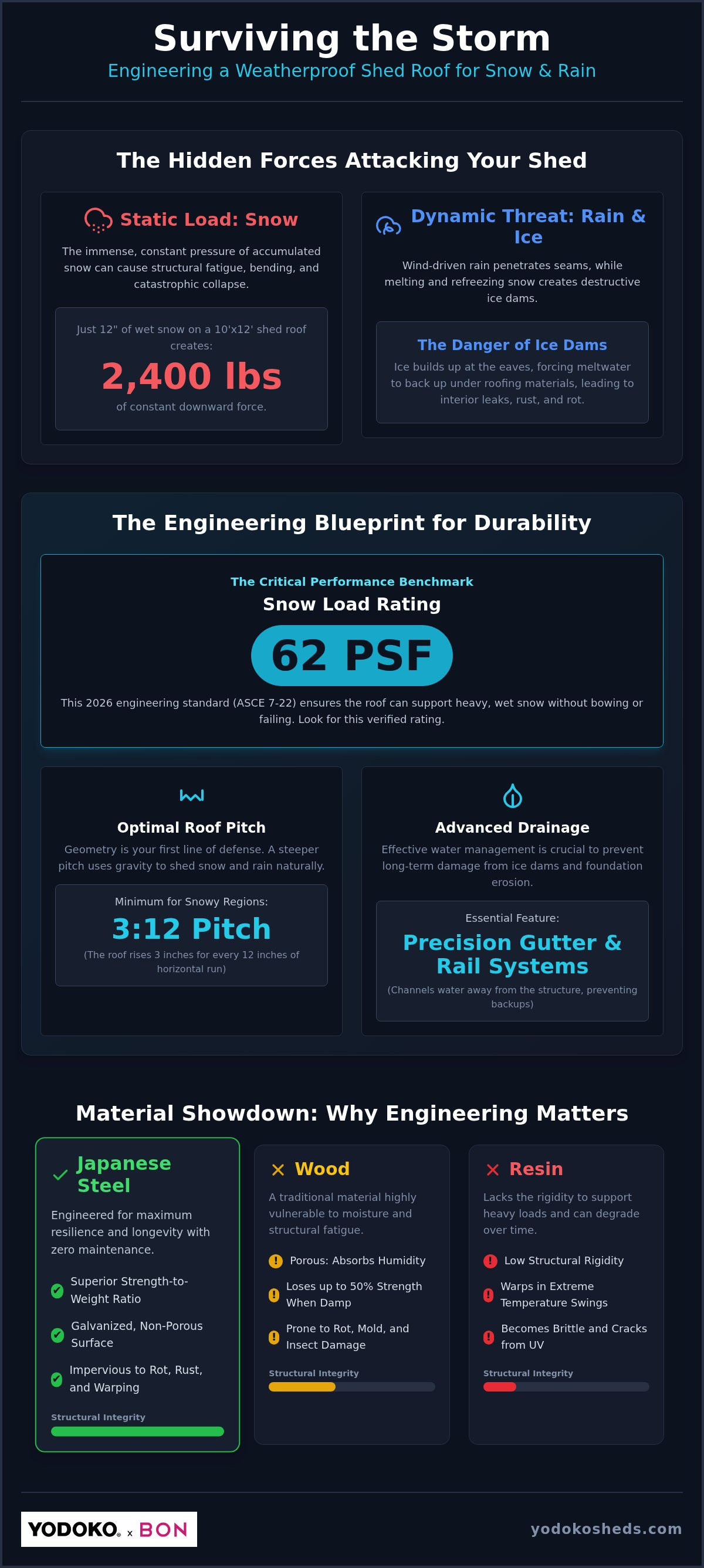
Static loads refer to the weight of snow sitting motionless on the roof. Understanding snow load principles is vital because wet snow is significantly heavier than the "powder" seen in photos. Wet snow can weigh up to 20 pounds per cubic foot. On a standard 10x12 shed, just 12 inches of wet snow translates to over 2,400 pounds of constant downward force. If the rafters aren't engineered to handle this "dead weight," the frame will eventually bow or snap.
Rain adds a dynamic element that many owners overlook. During torrential downpours, water isn't just falling; it's hitting the roof with velocity. This creates pressure differentials that "push" moisture into the smallest gaps in the structure. Poorly designed roofs also suffer from "ice dams." This occurs when snow melts near the roof peak, flows down, and refreezes at the colder eaves. This ridge of ice forces liquid water to back up under shingles or through seams, leading to rapid internal rot and rust.
Understanding Static vs. Dynamic Loads
Static loads exert constant, unyielding pressure that tests the shed's vertical support system. Over time, this leads to structural fatigue where materials lose their "memory" and stay bent. Dynamic loads from wind-driven rain create lateral pressure. This force pulls at roof seams and joint seals. Without precision-engineered joints, these shifting pressures create micro-tears in the roofing material, allowing moisture to bypass traditional weatherproofing and ruin your interior assets.
The Hidden Danger of Moisture Retention
Traditional materials like wood and resin struggle in high-moisture environments. Wood is particularly vulnerable because it's a porous material that absorbs humidity from the air. When damp, wood can lose up to 50% of its structural strength, making it far more likely to fail under the next snow cycle. Resin sheds often lack the internal rigidity to support heavy loads and can warp during extreme temperature fluctuations. Using non-porous materials ensures the structure remains impervious to water absorption, maintaining its integrity for decades.
Decoding Shed Roof Design: Geometry, Pitch, and Drainage Systems
Geometry is your first line of defense. A smart shed roof design for snow and rain uses gravity to its advantage by ensuring that precipitation moves off the surface before it can settle and freeze. While many builders focus on the "skin" or roofing material, the actual shape of the structure determines how effectively it manages environmental stress. In areas prone to heavy winter storms, a roof that holds onto snow is a liability that will eventually fail.
Most generic sheds lack a specific snow load benchmark, leaving homeowners to guess their safety. To address this gap, look for structures with a verified rating of at least 62 PSF (pounds per square foot). This 2026 engineering standard ensures the roof can support the weight of heavy, wet snow packs without the internal skeleton bowing. The internal rafters are the true heroes here; steel rafters provide a much higher strength-to-weight ratio than traditional wood, allowing for a slimmer profile that supports more weight.
The debate between Gable and Pent roof designs often comes down to personal style, but both have technical merits. Gable roofs divide the snow load across two slopes, while Pent roofs simplify water management by directing all runoff to a single side. Regardless of the shape, the internal water management system is what prevents long-term damage. If you're looking for a structure that masters these geometric challenges, explore the Japanese-engineered steel sheds available from Yodoko Sheds.
Calculating the Ideal Roof Pitch
In snowy regions, a 3:12 pitch is the absolute minimum requirement. This means the roof rises 3 inches for every 12 inches of horizontal run. Steeper angles are even better for shedding snow naturally, though they increase the shed's profile. You must balance this height with wind resistance; a very high-pitched roof acts like a sail in hurricane-prone zones, so choosing a moderate pitch with high-strength steel is often the safest middle ground.
Advanced Drainage Engineering
External gutters are a common addition, but they often fail when they clog with autumn leaves or sag under the weight of ice. Precision-engineered sheds utilize overhanging eaves and integrated rail systems to move water away from the structure entirely. This prevents water from pooling at the base of your walls. Hydrostatic pressure is the force exerted by standing water against the shed's vertical surfaces, which can eventually push moisture through even the tightest seals.
Material Science: Why Japanese Steel Outperforms Wood and Resin
Many homeowners assume that wood is the most durable material for heavy snow, but modern material science proves otherwise. Traditional timber absorbs moisture, leading to internal rot and structural fatigue that is often invisible to the naked eye. In contrast, high-grade Japanese steel provides a strength-to-weight ratio that wood simply cannot match. This allows for a shed roof design for snow and rain that uses slimmer rafters to hold more weight, maximizing your interior storage space while ensuring structural safety.
Standard carbon steel often fails in wet climates, but galvanized steel uses a specific chemical process to prevent oxidation. By bonding a layer of zinc to the steel core, the material becomes practically immune to the elements. When you compare powder coated steel shed benefits to traditional liquid paint, the difference in durability is striking. Powder coating creates a hard, non-porous finish that won't crack or peel under the weight of a snow pack or the constant battering of rain.
Beyond weather resistance, steel offers secondary benefits that organic materials lack. It's completely fireproof and impervious to pests like termites or carpenter ants. These factors make it the ideal choice for protecting valuable assets in harsh environments where seasonal maintenance is difficult or impossible.
Corrosion Resistance in Rainy Climates
Multi-layer coatings are essential for long-term survival in high-precipitation zones. The science behind galvanized steel includes a self-healing zinc coating; if the surface is scratched, the surrounding zinc sacrifices itself to protect the exposed steel through an electrochemical reaction. This advanced protection is why steel shed engineering is the gold standard for 2026. It ensures that salt-air and torrential rain never compromise the core structural integrity of your storage unit.
Structural Rigidity Under Pressure
Japanese engineering takes material science a step further by utilizing precision-folded panels. These folds act like mini-girders, increasing the stiffness of the entire structure without adding unnecessary bulk. Resin sheds often become brittle in freezing temperatures and soft during hot summer rains, leading to permanent warping. Steel remains stable across all temperature ranges. This reliability is backed by a 20-year structural warranty, a clear indicator of engineering confidence that you won't find with inferior wood or plastic alternatives.
Site Preparation and Load Management: Protecting Your Structure
A superior shed roof design for snow and rain is only as effective as the ground beneath it. If your foundation shifts or sinks under the weight of a winter storm, the precision-folded joints and drainage channels of the roof can fall out of alignment. This leads to leaks and structural stress that even the best engineering cannot fully overcome. Professional site preparation ensures that your investment remains level and dry through decades of seasonal cycles.
Anchoring is equally critical for extreme weather. While Japanese-engineered steel is robust, wind-driven rain and hurricane-force gusts can create significant uplift. Secure anchoring prevents the structure from shifting, which protects the integrity of the roof-to-wall seals. Additionally, a proper ventilation strategy is essential. High-performance metal sheds are nearly airtight; therefore, integrated vents are necessary to allow air exchange and prevent condensation from forming on the underside of the roof panels during temperature swings.
Managing Ground Saturation
A concrete slab is the gold standard for structures rated for heavy snow loads. Unlike gravel or wood skids, a slab provides a non-shifting surface that handles thousands of pounds of static pressure without compression. To manage torrential rain, install perimeter drains to redirect the thousands of gallons of water that shed off the roof annually. This prevents wicking, where moisture is pulled from saturated soil into the lower wall panels, which is a common cause of premature rot in inferior structures.
Safe Snow Clearing Protocols
Even with a high snow load rating, knowing how to manage accumulation is vital. Never clear only one side of a roof; this creates an unbalanced load that puts uneven torque on the frame. Use a telescoping roof rake with a poly blade rather than a metal shovel to avoid scratching the protective powder coating. During a record-breaking blizzard, look for doors that become difficult to slide or visible bowing in the ceiling panels as signs of extreme stress. If you want a structure designed to handle these loads with minimal intervention, explore our hurricane-rated steel storage solutions.
Engineered Resilience: The Yodoko Advantage for Extreme Weather
When environmental conditions reach their peak, the difference between a standard shed and an engineered structure becomes clear. The Yodoko LMDS and ESF series represent the pinnacle of Japanese engineering, specifically adapted for the diverse climates of North America. These sheds aren't just built; they're designed to thrive where others fail. By prioritizing shed roof design for snow and rain, Yodoko provides a "set it and forget it" solution for homeowners who value their time and their assets.
A standout feature of these models is the proprietary rail and gutter system. Unlike external gutters that catch debris and ice, Yodoko integrates water management into the structural frame. This system guides torrential runoff away from the doors and foundation, ensuring the interior remains bone-dry. This rain resistance is intrinsically linked to the shed's hurricane-rated performance. When a structure is engineered to withstand 76 MPH winds, the tolerances between panels are so tight that wind-driven rain simply cannot find a way inside. It's a level of protection that transforms a simple storage unit into a generational investment, backed by a 20-year structural warranty.
The Yodoko LMDS Roof System
The LMDS series features reinforced roof panels engineered to handle a verified snow load of up to 62 PSF. This is achieved through a unique interlocking panel system. While traditional sheds rely on caulk or silicone sealants that eventually dry out and crack, Yodoko uses mechanical geometry to create a watertight bond. The galvanized steel finish provides 24/7 protection against rain exposure, ensuring that rust never gets a foothold even in high-humidity coastal environments. It's the ultimate shed roof design for snow and rain, combining high-capacity weight support with absolute moisture exclusion.
Ready for the Storm
Securing this level of protection for your equipment is a straightforward process. You can browse the full range of sizes and specifications to order your weather-rated steel shed online. For those who want to ensure absolute structural performance without the DIY hassle, our professional Assembly Service is available to handle the installation from the ground up. This ensures every rail, panel, and fastener is positioned exactly as the engineers intended. Explore the Yodoko LMDS Steel Shed for high-performance storage and give your valuables the fortress they deserve.
Secure Your Assets for the Seasons Ahead
Selecting a high-performance shed roof design for snow and rain is the primary factor in determining your storage unit's lifespan. You now understand how Japanese engineering uses advanced geometry and material science to solve the complex physics of structural failure. By prioritizing a roof that sheds heavy snow packs and redirects torrential rain through integrated drainage, you effectively eliminate the constant risks of rust, rot, and structural collapse. These aren't just storage units; they're precision-engineered shields for your most valuable equipment.
Yodoko sheds offer a definitive solution for those who refuse to compromise on quality. Our structures feature Japanese-engineered galvanized steel and are hurricane-rated for maximum stability in extreme environments. This reliability is backed by a 20-year structural warranty, ensuring your assets remain protected through decades of unpredictable seasons. You don't have to spend another winter worrying about roof loads or leaking seams.
Take the guesswork out of outdoor storage and choose a structure built to outlast the elements. It's time to invest in a solution that provides total peace of mind regardless of the forecast.
Find Your Weather-Proof Storage Solution at Yodoko Sheds
Frequently Asked Questions
How much snow can a standard steel shed roof actually hold?
Standard steel sheds vary, but Yodoko engineered models are rated for up to 62 pounds per square foot (PSF). This capacity allows the structure to safely support several feet of fresh snow or a significant layer of heavy, wet accumulation. For most North American regions, this rating meets or exceeds local building codes. Always check your specific model's rating to ensure it matches your local climate's historical peak loads and safety requirements.
What is the best roof pitch for a shed in a rainy climate?
A minimum pitch of 3:12 is recommended for effective water shedding in rainy environments. This angle ensures that torrential rain moves quickly toward the drainage system rather than pooling on the surface. While steeper pitches offer even faster runoff, a 3:12 ratio provides a balanced profile that maintains wind resistance. A well-executed shed roof design for snow and rain relies on this geometric efficiency to prevent moisture from penetrating the panel seams.
Do metal sheds rust faster in coastal or high-rain areas?
Standard carbon steel sheds are prone to rapid oxidation, but galvanized steel with multi-layer coatings is designed to resist rust in coastal zones. The zinc layer in galvanized steel acts as a sacrificial barrier that prevents salt and moisture from reaching the core. Yodoko sheds utilize this technology along with powder coating to ensure the structure remains rust-proof even when exposed to constant saltwater mist or heavy annual rainfall.
How do I prevent ice dams from forming on my shed roof?
Preventing ice dams requires a combination of proper insulation and a smooth, non-porous roof surface. Ice dams occur when heat from inside the shed melts snow on the roof, which then refreezes at the colder eaves. Using a steel roof with integrated drainage allows water to flow off before it has a chance to refreeze. Ensuring your shed is well-ventilated also keeps the roof temperature consistent, which is a key component of effective shed roof design for snow and rain.
Is a gable roof or a lean-to roof better for heavy snow loads?
Gable roofs are generally superior for heavy snow because they distribute the weight across two sloping planes. This symmetry reduces the stress on the central ridge and allows snow to slide off both sides of the structure. While lean-to roofs are excellent for directing water to a single drainage point, they can accumulate more weight on one side if not perfectly aligned with prevailing winds. Both require high PSF ratings for winter safety.
Can I add extra reinforcement to my shed roof for extreme winters?
Most high-performance steel sheds are engineered as a complete system, so adding aftermarket reinforcement is rarely necessary or recommended. Modifying the structure can sometimes compromise the original engineering tolerances or void your warranty. Instead of retrofitting, it's better to choose a model like the LMDS series that is already rated for 62 PSF. These units use precision-folded steel rafters that provide all the structural rigidity needed for extreme winter conditions.
What maintenance does a steel shed roof need after a major storm?
Maintenance is minimal, but you should inspect the roof for large debris and check that the drainage channels are clear. After a major blizzard, use a poly-bladed roof rake to remove excessive snow if it exceeds the rated capacity. Avoid using metal tools that could scratch the protective powder coating. A quick visual check of the interior for condensation or signs of panel shifting will ensure your shed remains in peak condition for the next storm.
Does a 20-year warranty cover damage from snow and rain?
A 20-year structural warranty typically covers defects in materials and workmanship that lead to roof leaks or structural failure under normal conditions. This includes protection against rust-through and failure of the steel frame. It's important to note that warranties usually require proper assembly and site preparation. If a shed is damaged because it wasn't anchored correctly or the snow load exceeded the rated PSF, those specific incidents might not be covered by the policy.