

2026 Guide: Fire-Resistant Outdoor Storage Ratings
Your "weather-resistant" shed might be a disaster waiting to happen if it isn't built to handle extreme heat. Most people assume that a sturdy-looking structure is naturally safe, but when a fire breaks out, many common materials act as fuel rather than a shield. It's frustrating to face confusing building codes while worrying about protecting your expensive tools and equipment from wildfires or accidental sparks. We know you want a storage solution that offers genuine peace of mind rather than a false sense of security.
We understand that the technical details of a fire rating for outdoor structures can feel overwhelming and inaccessible. This 2026 guide clears the smoke by explaining exactly how these ratings work and why your choice of material is the only thing standing between your assets and total loss. You'll gain the confidence to choose a structure that doesn't just store your items but actively protects them from the unthinkable.
We'll dive into the specific terminology used by inspectors, compare the fire performance of steel versus resin, and show you how to ensure your storage solution meets local safety standards. By the end, you'll know why Japanese-engineered steel is the gold standard for high-stakes protection.
Key Takeaways
- Understand how a fire rating for outdoor structures distinguishes between non-combustible materials and those that simply delay ignition.
- Discover why steel is the safest material for fire-prone areas because it doesn't act as fuel or contribute to the spread of flames.
- Learn how to identify if your property falls within Wildland-Urban Interface (WUI) zones and which materials meet these rigorous safety standards.
- Explore the technical differences between Type 1 and Type 2 construction to determine which level of protection your storage requires.
- See how Japanese-engineered steel sheds provide long-term reliability with fire-proof properties and a 20-year structural warranty.
What is a Fire Rating for Outdoor Structures?
A fire rating for outdoor structures isn't a suggestion; it's a measure of how well a building stands its ground against intense heat and flames. At its core, fire resistance refers to a structure's ability to maintain its integrity and prevent a fire from spreading to nearby buildings or vegetation. This metric tells you if your shed will act as a shield for your valuables or if it will simply become extra fuel for the fire.
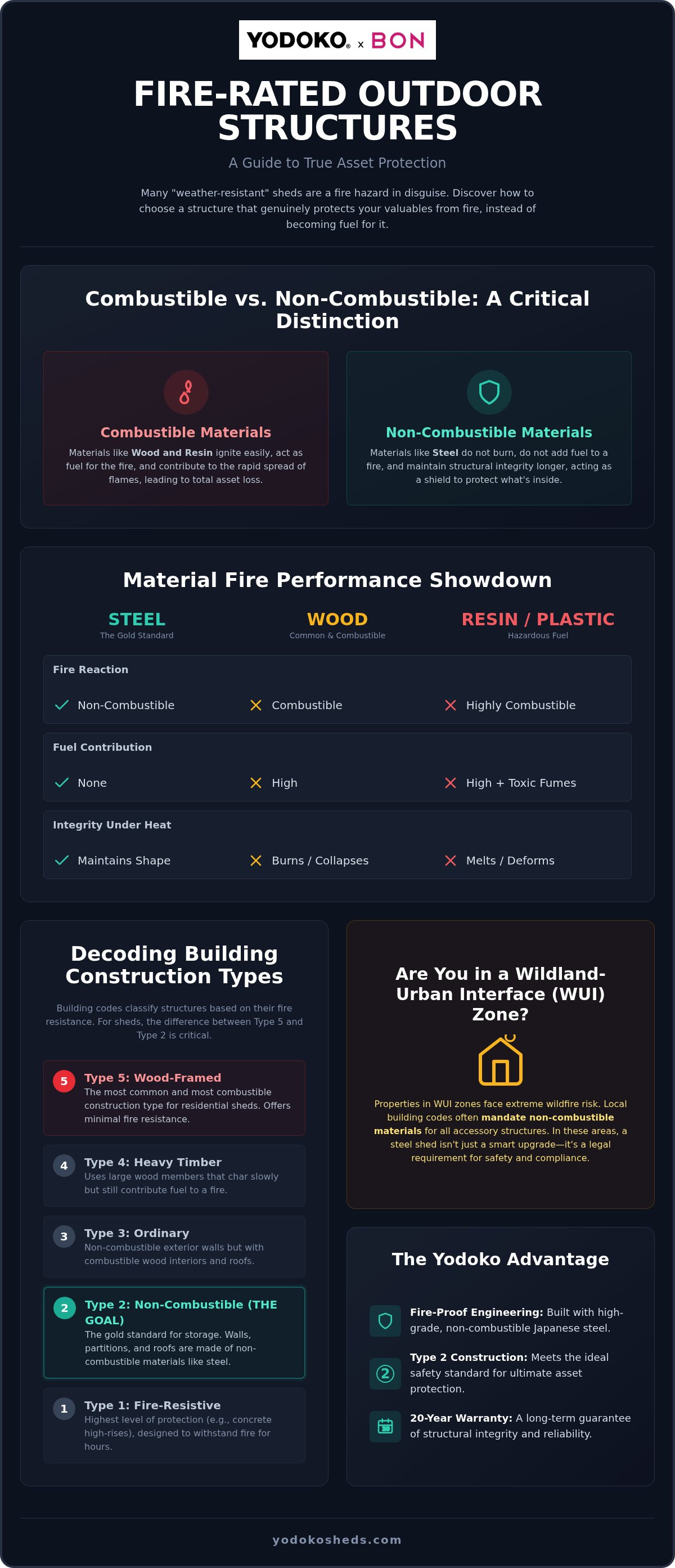
Understanding these ratings requires looking at three main classifications. Fire-resistive structures are built with materials like reinforced concrete or specially treated steel that can withstand high temperatures for extended periods. Non-combustible materials, such as the high-grade steel found in Yodoko Sheds LMDS and ESF sheds, won't ignite or contribute to the fire's growth. In contrast, combustible materials like wood or standard resin are inherently flammable and can accelerate a fire's path. For homeowners, selecting a high fire rating for outdoor structures is often a functional necessity for securing local building permits or satisfying property insurance requirements in high-risk zones.
Fire Resistance vs. Fire Protection
It's easy to confuse these two terms, but they serve different roles in safety engineering. Fire resistance is a passive, structural metric. It's baked into the material choice of the walls, doors, and roof. Fire protection usually refers to active systems, such as smoke detectors or automatic sprinklers. Since most outdoor sheds aren't equipped with complex plumbing for sprinklers, the structural resistance of your material is your first and only line of defense. A shed built with non-combustible steel provides constant protection without needing an external power or water source to function.
The Hourly Rating System
Engineers use a Fire-resistance rating to quantify how long a specific assembly can endure a standardized fire test, such as the ASTM E119. You might see terms like "1-hour" or "2-hour" ratings in commercial building contexts. These numbers represent the exact time a wall or door remained stable under extreme heat before failing. While most residential sheds are classified by their material type rather than specific hourly tests, these standards highlight the rigorous engineering required to protect assets. Choosing a material that is naturally non-combustible provides a level of safety that combustible alternatives simply can't match, regardless of how many chemical coatings they use.
The Five Building Construction Types: Where Does Your Shed Fall?
Building codes classify every building into five distinct categories based on how they behave during a fire. While these classifications are often discussed in the context of skyscrapers or homes, they are increasingly vital for determining the fire rating for outdoor structures. Knowing where your shed falls on this spectrum helps you understand the true level of risk your valuables face every day.
- Type 1: Fire-Resistive. These are typically high-rise buildings made of reinforced concrete and protected steel. They are designed to withstand fire for hours without structural failure.
- Type 2: Non-Combustible. This category includes structures where the walls, partitions, and roofs are made of non-combustible materials like steel. This is the ideal tier for high-quality outdoor storage.
- Type 3: Ordinary. These buildings have non-combustible outer walls, but the interior supports and roof are often made of wood.
- Type 4: Heavy Timber. These use large wooden members that char slowly in a fire, but they still provide fuel to the flames.
- Type 5: Wood-Framed. This is the most common and most combustible type of construction, used for most standard residential sheds.
Choosing the right category isn't just about safety; it's about compliance. Many regions now enforce specific Wildfire Mitigation provisions that dictate what materials can be used for accessory structures on your property. If you live in a high-risk area, moving from a Type 5 wood structure to a Type 2 steel structure isn't just a smart upgrade; it may be a legal requirement.
Why Type 2 Construction is the Goal for Storage
Type 2 construction is the gold standard for anyone serious about asset protection. Because these structures use non-combustible steel for all primary components, they don't provide fuel for an advancing fire. If you store gasoline for your lawnmower or propane for your grill, a Type 2 structure is essential. It prevents a small internal spark from turning into a total property loss. Our Japanese-engineered steel sheds are designed specifically to meet these high-stakes safety requirements, offering a level of security that wood simply can't match.
The Danger of Type 5 Wood and Resin Structures
Most retail sheds fall squarely into Type 5. Wood-framed units are essentially giant boxes of kindling sitting in your backyard. They contribute to fire spread between properties, often acting as a bridge that carries flames from a neighbor's yard to your main home. Resin sheds present a different but equally dangerous problem: the melting point. In high heat, resin structures can fail instantly, collapsing onto your equipment and potentially releasing toxic fumes. Because of these risks, many HOAs are moving toward requiring a higher fire rating for outdoor structures, often banning combustible materials entirely to lower the collective fire risk of the neighborhood.
Comparing Materials: Steel vs. Wood vs. Resin in Fire Scenarios
When evaluating a fire rating for outdoor structures, the material isn't just a design choice; it's a survival strategy. Steel stands alone as a non-combustible material that doesn't ignite or feed a growing fire. Unlike wood, which serves as kindling, or resin, which can melt away in minutes, high-quality steel maintains its structural integrity far longer during an emergency. This reliability is why materials are tested against the ASTM E119 standard, which measures how long an assembly can resist fire before failing. Wood structures require heavy chemical treatments to achieve even minimal resistance, and even then, they eventually contribute to the fire's energy. Resin sheds are particularly vulnerable because they lose their shape at relatively low temperatures, exposing your tools and equipment to direct flames while releasing toxic smoke into the air. The powder coated steel shed benefits go beyond aesthetics; the finish helps the metal resist heat-induced surface damage, ensuring the shed remains a durable barrier. By choosing a non-combustible option, you are effectively removing a significant hazard from your property.
The Science of Steel Performance
Our steel shed engineering prioritizes thermal stability, ensuring the structure doesn't warp or collapse under the stress of rapid temperature changes. Japanese-engineered steel handles thermal expansion gracefully, maintaining the seal of the shed even when the exterior environment is hostile. This precision prevents doors from jamming during heat events, which is vital for maintaining access to emergency equipment.
A non-combustible steel shed serves as a critical fire break on a residential lot by preventing flames from leaping between your landscaping and your primary residence.
Combustibility and Fuel Load
Every item on your property contributes to its "fuel load," which is the total amount of combustible material available to feed a fire. A wood shed adds significantly to this load, turning a small garden fire into a major blaze. Storing a gas-powered lawnmower inside a wooden structure creates a double fire hazard because you have a flammable liquid housed inside a flammable container. In contrast, a fire rating for outdoor structures that utilizes non-combustible steel walls provides a containment vessel. These structures help protect your landscape by keeping internal accidents localized and preventing external embers from igniting the contents within.
Navigating WUI Standards and Local Fire Codes
The Wildland-Urban Interface (WUI) is a national classification for areas where human development meets undeveloped wildland or vegetative fuels. If your property sits within one of these zones, a specific fire rating for outdoor structures is likely a legal requirement rather than a choice. These standards exist because detached buildings often act as "fire bridges," allowing flames to hop from a forest or grassland directly to your main residence. Choosing ignition-resistant materials is the most effective way to break this chain and protect your entire property from catastrophic loss.
Defensible space is your primary defense against wildfires. This is the buffer you create between a building and the grass, trees, or any wildland area that surrounds it. Placing a combustible wooden shed in this zone defeats the purpose of your safety perimeter. Interestingly, shed wind rating standards and fire safety are closely linked. High wind ratings indicate superior structural seals. These seals are vital during a fire because they prevent wind-driven embers from being sucked into the unit, where they could ignite stored items like cardboard boxes or seat cushions.
WUI Compliance for Detached Structures
Local ordinances often enforce strict rules for any accessory building located within 30 feet of a primary residence. In these high-risk areas, non-combustible roofing is usually a mandatory requirement. Embers can travel miles ahead of an actual fire front, landing on roofs and starting new blazes. Your shed roof design for snow and rain should also prioritize ember resistance. Steeply pitched metal roofs are ideal because they don't allow hot embers to pool or settle in crevices, significantly reducing the chance of an ignition during a wildfire event.
Permits and Fire Safety Inspections
Navigating the permit process requires clear documentation of your building materials. A local fire marshal might need to approve your storage shed placement to ensure it doesn't block emergency access paths for firefighters. When you submit your plans, providing material specifications for non-combustible steel can simplify the approval process. Steel sheds often bypass the expensive and complex fire-proofing treatments that building departments require for wood structures. Because steel doesn't contribute to the fuel load, it's viewed as a much lower risk by inspectors and insurance providers alike.
Ready to secure your property with a code-compliant storage solution? Explore our fire-proof and rust-proof steel sheds to find the perfect fit for your needs.
The Yodoko Advantage: Fire-Proof Engineering for Peace of Mind
Choosing a storage solution involves more than just picking a size and color. It's about trusting the engineering that protects your property. Yodoko Sheds brings a 90-year legacy of Japanese engineering to the forefront, offering a level of durability that standard retail units simply can't match. When you evaluate the fire rating for outdoor structures, you'll find that our YODOKO LMDS Steel Shed and YODOKO ESF Steel Shed lines are purpose-built to exceed expectations. These structures aren't just rust-proof; they're explicitly fire-proof, providing a non-combustible sanctuary for your most valuable assets. This commitment to quality is backed by a 20-year structural warranty, ensuring your investment remains secure for decades. We act as your trusted advisor, helping you move away from flimsy materials toward a solution designed for high-stakes environments.
Designed for the Toughest Environments
Engineering for fire safety requires a holistic approach to structural integrity. Our sheds combine fire resistance with hurricane-rated strength, making them capable of withstanding extreme environmental pressures that would destroy lesser structures. The galvanized steel panels are treated with a specialized powder-coated finish that adds a critical layer of heat resistance. This finish helps prevent the metal from degrading under thermal stress, maintaining the shed's protective barrier even in intense conditions. Precision manufacturing ensures that every panel fits together perfectly. This tight assembly quality is essential during a wildfire, as it eliminates gaps where wind-driven embers could enter and ignite the interior contents. You aren't just buying a box; you're investing in a precision-engineered shield that keeps hazards out.
Investing in Long-Term Safety
It's helpful to view a high-quality steel shed as an insurance policy for your equipment. Compare the cost of a YODOKO ESF Steel Shed to the total replacement value of your riding mower, power tools, and seasonal gear. In a fire scenario, the difference between a combustible wood shed and a high fire rating for outdoor structures achieved through steel is the difference between total loss and total protection. Beyond asset safety, a fire-resistant structure adds tangible value to your property. Potential buyers and insurance providers recognize the decreased risk associated with non-combustible outbuildings, especially in regions prone to wildfires. Choosing Yodoko means choosing a legacy of reliability and a future of security. Don't settle for a structure that contributes to a fire when you can have one that stands against it.
Explore the fire-proof Yodoko LMDS and ESF collections today.
Future-Proof Your Property with Superior Fire Safety
Selecting a high-quality fire rating for outdoor structures isn't just about satisfying a building inspector; it's about ensuring your valuables survive an emergency. Non-combustible steel eliminates the fuel load that traditional wood and resin sheds provide. By prioritizing Type 2 construction and adhering to local WUI standards, you create a legitimate fire break on your property that protects both your assets and your home. This proactive approach to safety is the hallmark of a responsible property owner who values long-term security over short-term convenience.
You deserve a storage solution that doesn't just hold your tools but actively defends them against heat, wind, and embers. With 90 years of Japanese engineering heritage, our hurricane and fire-rated steel sheds are built to withstand the most extreme environments on the planet. You'll rest easy knowing your investment is protected by a 20-year structural warranty and the most reliable materials available. Secure your valuables with a fire-proof Yodoko steel shed today. Taking this step now ensures that your property remains a safe haven for years to come.
Frequently Asked Questions
Are metal sheds actually fireproof?
Metal sheds made from high-grade steel are non-combustible, meaning they won't ignite or contribute fuel to a fire. While "fireproof" is a general term, technical standards focus on a material's ability to resist melting and structural failure under heat. Yodoko sheds use Japanese-engineered steel designed to maintain integrity during environmental crises. Unlike wood or resin, steel provides a reliable barrier that prevents a small spark from becoming a total property loss.
What is the best fire-rated material for a garden shed?
Non-combustible steel is the superior choice for any fire-rated outdoor structure. It offers the highest level of protection because it doesn't feed the flames. Wood structures require ongoing chemical treatments to achieve even basic resistance, and resin sheds fail quickly when exposed to moderate heat. For homeowners in high-risk zones, steel provides the most consistent safety profile and requires the least amount of maintenance to keep its fire-resistant properties intact over time.
Do I need a fire-rated shed to comply with WUI building codes?
You often need a specific fire rating for outdoor structures if your property is located within a Wildland-Urban Interface (WUI) zone. Local building codes in these areas frequently mandate ignition-resistant materials for all accessory buildings, especially those near a primary residence. Using a non-combustible steel shed can simplify the permitting process. It demonstrates to local fire marshals that your storage solution won't act as a fire bridge that carries flames to your home.
Can a fire-resistant shed lower my home insurance premiums?
A fire-resistant shed can potentially lower your property insurance costs by reducing the overall risk profile of your lot. Insurance providers assess the fuel load on your property, and replacing a combustible wood shed with a non-combustible steel version lowers that risk. While every provider is different, many offer credits for fire-hardening measures. It's best to provide your agent with the material specifications of your steel shed to see if you qualify for a premium reduction.
What happens to the contents of a steel shed during a fire?
The contents of a steel shed are shielded from direct flame contact and wind-driven embers, which are the leading causes of ignition during wildfires. While the interior temperature will rise during a fire, the non-combustible walls prevent the structure itself from collapsing or adding fuel to the blaze. This protection is often enough to save tools and equipment from a passing fire front that would have completely consumed a wooden or plastic structure in minutes.
Is there a difference between "fire-resistant" and "non-combustible"?
Non-combustible refers to materials like steel that won't burn or ignite when exposed to fire. Fire-resistant is a broader term used to describe how long a structural assembly can withstand heat before failing. In the context of a fire rating for outdoor structures, non-combustible materials provide the most reliable foundation. They don't rely on chemical coatings that can wear off. Instead, the material's inherent properties provide a permanent defense against ignition and fire spread.
How do I know if my local area requires a fire-rated outdoor structure?
You should contact your local building department or fire marshal's office to confirm specific requirements for your area. They can identify if your property sits in a high-fire-hazard severity zone or a WUI area. These designations usually trigger mandatory requirements for ignition-resistant materials. Reviewing your local Homeowners Association (HOA) bylaws is also a smart move. Many modern HOAs now require non-combustible storage solutions to protect the entire neighborhood's collective safety and property values.
Does powder coating help with a shed’s fire rating?
High-quality powder coating enhances a shed's performance by providing an additional layer of heat resistance to the underlying steel. This finish helps prevent surface degradation and keeps the metal from warping during rapid temperature fluctuations. While the steel itself provides the primary non-combustible benefit, the coating ensures the structure remains durable and rust-proof even after exposure to harsh environmental conditions. Yodoko uses advanced coating technologies to ensure our sheds maintain their integrity and appearance for decades.